How to pay creators and freelancers if your company uses Coupa
Find out how to pay creators and freelancers easily if your company uses Coupa.

Lumanu

11
/
20
/
2026
Comprehensive Guide to Onboarding Influencers to Coupa
Onboarding influencers to Coupa can be a time-consuming process. This guide will walk you through each step in detail, ensuring a thorough understanding of the typical process and requirements involved.
Part 1 covers the steps by the marketing team and Part 2 covers the steps that influencers must take during their onboarding process. Many companies build out a pdf laying out the step by step process, we’ve included example screenshots from publicly available onboarding guides used in practice.
When managing a few freelancers, this process is manageable. As the number of freelancers scale it may be time to consider using a specialized platform like Lumanu that works alongside Coupa as a master vendor for influencer and other marketing freelancer onboarding and payments, providing a more efficient and streamlined process.
Short answer: two ways to pay creators through Coupa
You can onboard each creator as a supplier in the Coupa Supplier Portal, which means company information, tax details, remit-to and banking details, financial and legal assessments, and a purchase order per campaign. Or you can onboard a vendor of record once, pay every creator against that single supplier record, and consolidate POs to the campaign or the quarter. The steps below cover the first route in full, for teams who need it.
Part 1: Marketing Team's Interaction with Influencers to Get Them Setup as Vendors in Coupa
Step 1: Set Expectations with Influencers
Communication
Prepare and handoff an onboarding guide (Part 2 contains detailed steps)
Communicate with influencers to ensure they understand the process and that they receive the email invitation from Coupa.
Guide them through the account creation and profile completion steps if needed.
Step 2: Initiating the Onboarding Process
Requesting Onboarding
Fill out a New Supplier Request Form to initiate the influencer onboarding process.
Submit the form to trigger the Supplier External Update Form which will notify your vendor.
Step 3: Contract Preparation and Approval
Drafting Contracts
Use Coupa’s contract request interface to prepare agreements.
Submit the draft for approval through Coupa, ensuring all necessary senior leadership and departmental heads review and sign off.
Handling Feedback
Address any feedback or changes requested by finance or legal departments.
Step 4: Influencer Onboarding
Vendor Setup
Once the contract is approved, onboard the influencer in the Coupa system.
Ensure all financial documents (e.g., W9, banking details) are collected and uploaded.
Step 5: Creating Purchase Orders (POs)
PO Generation
After the influencer is set up as a vendor, generate a Purchase Order (PO) for the influencer.
Ensure the PO includes all necessary details, such as services provided and payment terms.
You may not need one PO per influencer
Most teams raise one purchase order per influencer per campaign, because that is what a supplier record implies. Run eighty creators a quarter and your coordinator sits in the PO queue eighty times.
A no PO, no pay policy does not require that. With a vendor of record holding the single supplier record, you raise one PO at the campaign, month or quarter level, and payments to individual creators draw against it. Procurement keeps the control it wants, applied at the level a creator program runs at.
Notion hit the per-influencer version of this on Zip, a comparable procurement platform, before switching. PO numbers went missing on invoices, and the team added them by hand and resubmitted.
Step 6: Managing Invoices and Payments
Invoice Submission
Inform influencers to generate and submit invoices through Coupa, ensuring they include the PO number.
Once submitted, verify that the invoices match the PO details and approve them in the system.
Payment Processing
Coordinate with the finance team to ensure timely processing of payments according to the agreed terms.
Ensure there is an emergency onboarding and manual entry process in place to use when necessary to expedite payments.
Paying faster than net 30 without an exception every time
Invoices settle on your company’s standard terms, usually net 30, 60 or 90. Creators will not wait that long, so marketing asks finance for an exception, then asks again on the next campaign.
Pre-funding removes the request. Your team funds the account ahead of the campaign, creator payments clear on your schedule, and the vendor of record invoices your company on standard terms. Some finance teams set one payment-terms exception for those invoices. One exception, not one per influencer.
Step 7: Monitoring and Troubleshooting
Tracking and Reporting
Maintain a tracker (i.e. spreadsheet) to monitor the status of contracts, POs, and payments.
Address any issues or discrepancies that arise, working with influencers and the finance team to resolve them promptly.
Accruals and Reconciliations
Ensure all expenses are correctly communicated to Finance to be accrued and reconciled in the system, matching invoices to the appropriate budget months.
Part 2: Influencer Onboarding Process
Step 1: Setting up a New Supplier Profile on Coupa
Email Invitation
Influencers will receive an email invitation from Coupa (do_not_reply@supplier.coupahost.com) with the subject line: "You are Connected to [Company] on Coupa."
Login to Coupa
Click the Login to Coupa button from the invitation email.

Step 2: Creating an Account
Account Information
Enter the required information:
Business Name
Email address
First Name (primary contact)
Last Name (primary contact)
Password (alphanumeric, minimum 8 characters)
Accept the Privacy Policy and Terms of Use by checking the corresponding box.
Click the Create an Account button.
Click Log In if you have an existing account
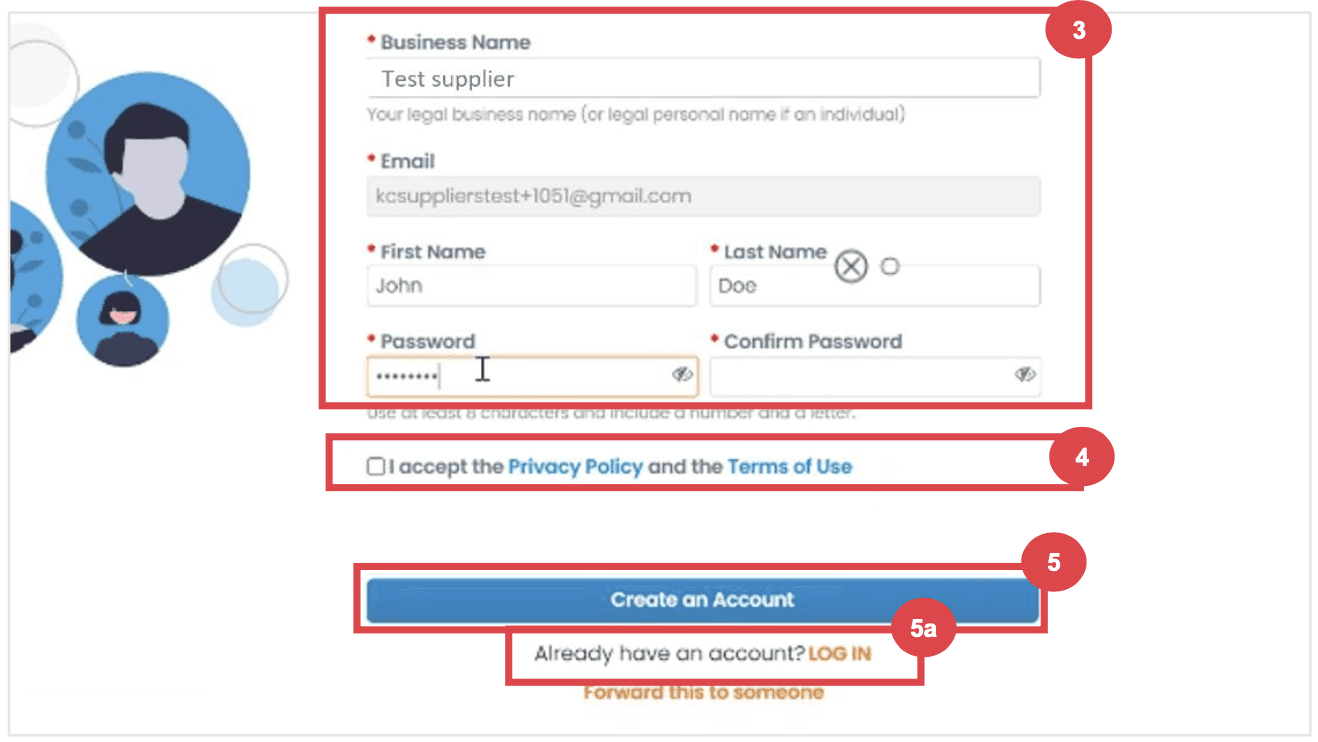
Step 3: Completing Company Information
Business Details
Enter your business details in the required fields:
Company Name
Country/Region
Address
City
State
Postal Code
Check the Invoice-from location box if the address is your invoice address.
Deselect the Pay to location (Remit-To) and Ship from location checkboxes if they do not apply.
Select the We support integration for invoicing checkbox if you plan to use cXML or SFTP transactions.
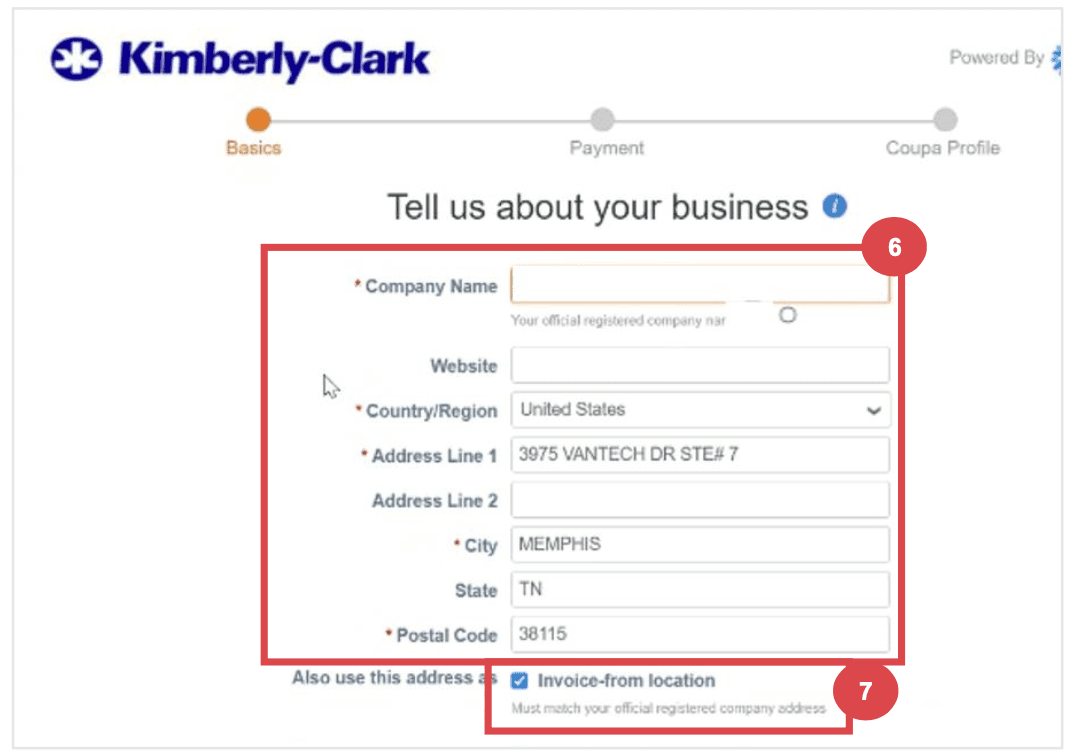
Step 4: Entering Tax Information
Tax Details
Select your tax country/region from the dropdown list.
Enter your Tax ID information or select the I don’t have a Tax ID Number checkbox if applicable.
Click the Next button.
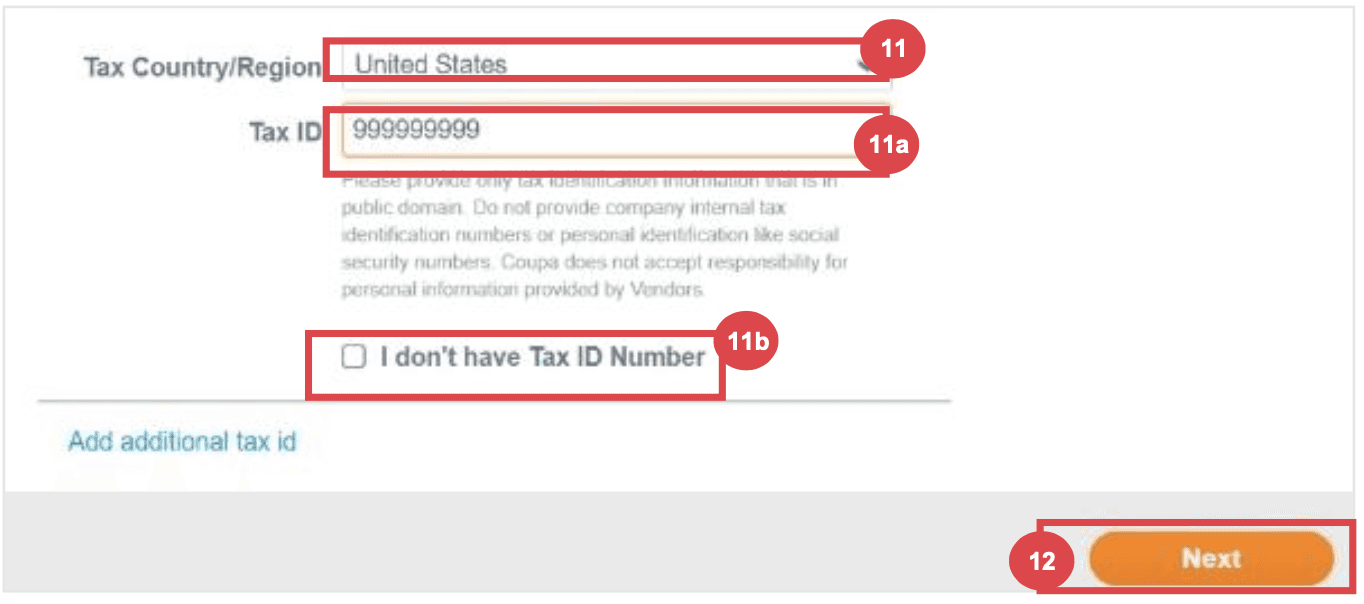
Step 5: Payment Discount Preferences (if enabled)
Preferences
Click Next within the Payment Discount Preferences pop-up without entering any information.

Step 6: Coupa Profile Enhancement
Profile Enhancement
Select Do it later on the Enhance your Coupa profile screen. Enhancements are optional and not necessary for registration.

Step 7: Add remit to and banking details
Select the radio button option Yes or No for the Do you need to add a Remit To/Bank Details? question to add or update banking information.
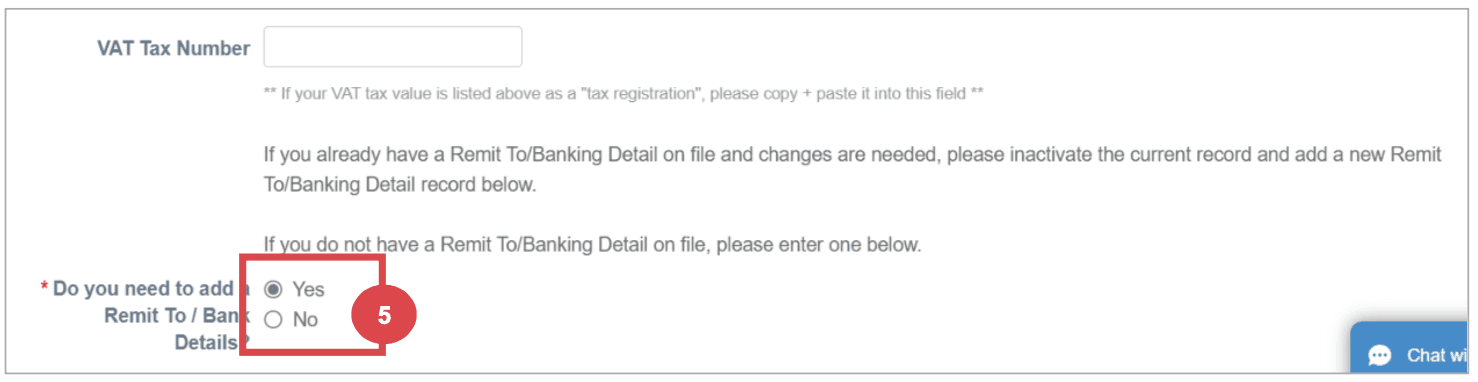
Click the Add Remit To button to add or update banking information.
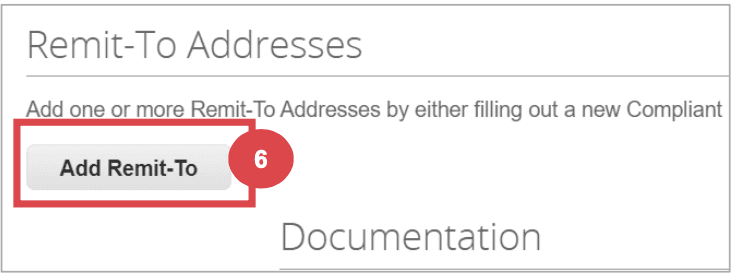
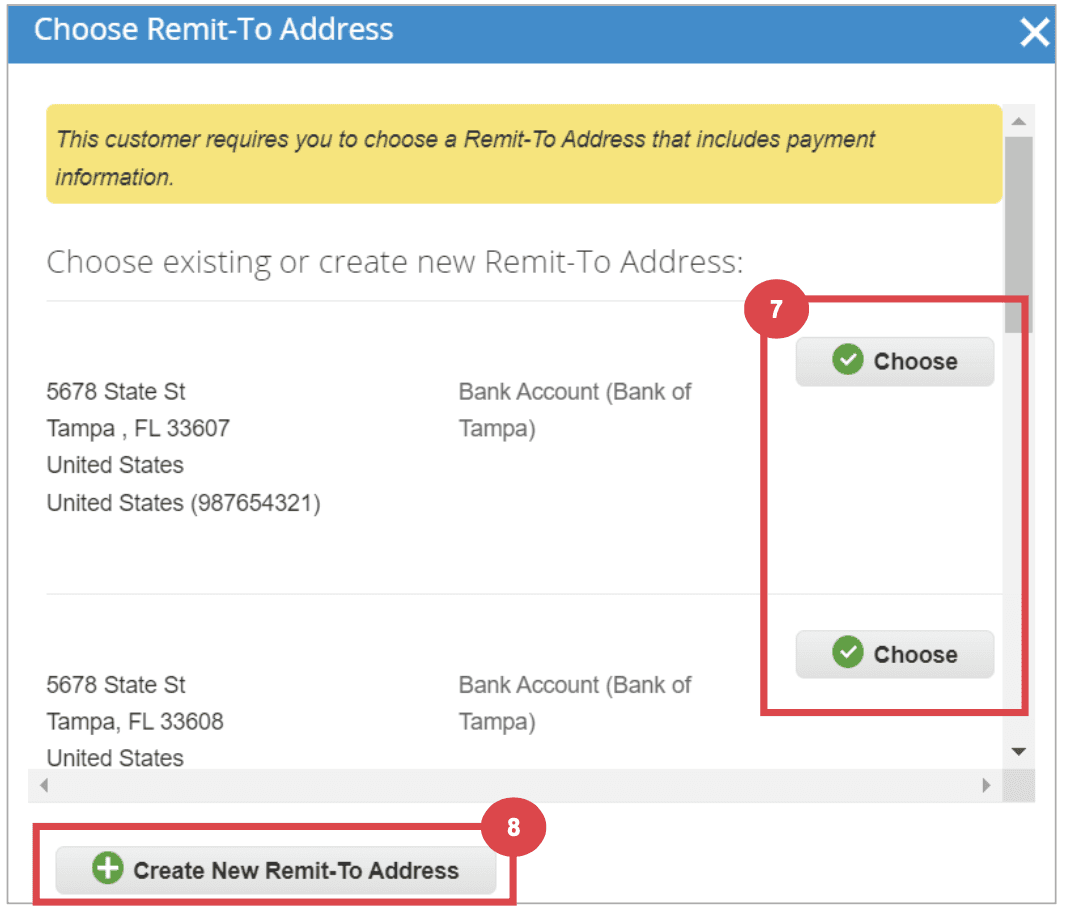
The Choose Remit-To Address screen appears.
a. Click the Choose button to add existing banking information.
b. Click the Create New Remit-To Address button to add new banking information.
Step 8: Updating an Existing Supplier Profile
Email Invitation for Updates
Existing suppliers will receive an email with the subject line: "[Company-Name] Profile Information Request – Action Required."
Click the Join and Respond button from the email.
Log in to the Coupa Supplier Portal with your credentials.
Click the Profile tab on the Coupa Supplier Portal home screen.
Complete or update the Supplier External Update Form as needed.

Step 9: Completing Financial and Legal Assessments
Email Invitation for Assessments
Suppliers may receive an email to complete a Financial and Legal Assessment.
Click the link in the email to access the assessment.
Provide all required financial and legal information.
Click the Submit button once the form is complete.
Step 10: Delegating Financial and Legal Assessments
Delegation Process
At the bottom of the assessment, select Delegate to assign the task to another individual.
Confirm the delegation and enter the delegate’s details.
The delegate will receive an email notification to complete the assessment.
Step 11: Updating General Information
Profile Updates
From the CSP home screen, click the Profile tab.
Select the area of the profile that requires editing.
Click the Edit Section button and provide any updates.
Save the changes by clicking Save changes or Save & Go to Next.
Additional Considerations
Document Attachments
Attach any relevant banking and tax documents, such as voided checks, tax forms, and certificates.
Diversity Information
Optionally add diversity details by selecting the appropriate categories.
Contact Information
Provide a Product Safety and Manufacturing Quality point of contact and verify the PO email address.


Here’s a link to Kimberley Clarks online Coupa help doc for the full version which was summarized above
Frequently asked questions
Do I need a purchase order for every influencer payment in Coupa?
Only if each influencer is their own supplier record. When a single vendor of record holds the supplier record, one PO at the campaign, month or quarter level covers every creator paid under it, and the no PO, no pay control stays in force.
How do I add an influencer as a supplier in Coupa?
You send an invitation to the Coupa Supplier Portal, and the creator creates an account, completes company information, enters tax details, adds remit-to and banking details and completes any financial and legal assessments your company requires. The steps above cover each of those in order.
What are the financial and legal assessments in Coupa?
They are the diligence questionnaires your company attaches to supplier registration, written for businesses with a finance function. Creators often delegate them, which is supported in Coupa and adds another person and another wait to the process.
Can I pay creators without adding each one to Coupa?
Yes, by paying them through a vendor of record that is already onboarded as a supplier. Your team adds creators and procurement adds no supplier records.
Who files the 1099 for creators paid through Coupa?
Your company does, for every creator onboarded as its own supplier. When payments run through a vendor of record, that entity files the 1099-K forms for the creators it pays.
Does this replace Coupa?
No. Coupa keeps the approval chain, the spend reporting and the audit trail. The vendor of record sits behind one supplier record in it.
Conclusion
The onboarding process for influencers on Coupa involves multiple detailed steps and careful attention to ensure all information is accurate and complete. The complexity of this process, especially at scale, underscores the advantages of utilizing a specialized platform like Lumanu, which simplifies and streamlines influencer payments and management.
Count what the creator has to get through: a portal account, company information, tax details, remit-to and banking details, and the financial and legal assessments, which many creators end up delegating because they are written for companies with a finance function. Each of those is a place where a creator stalls and emails your team instead.
A US creator completes onboarding with Lumanu in a median of 2 minutes 38 seconds, and more than 96% finish without contacting anyone (Lumanu platform data, 2026). The network holds more than 500,000 vendors, and more than 60% of the time a payment is created, that creator is already onboarded.
Lumanu gets set up once in Coupa as a master vendor of record. After that your team adds creators and procurement adds no suppliers. The W-9s, the W-8s, the screening and the 1099-K filing sit with the vendor of record.
For the tax rules and where the liability sits, see our guide to compliance for contractor payouts. If your company runs SAP Ariba instead, we have a walkthrough for that too.
More Posts